





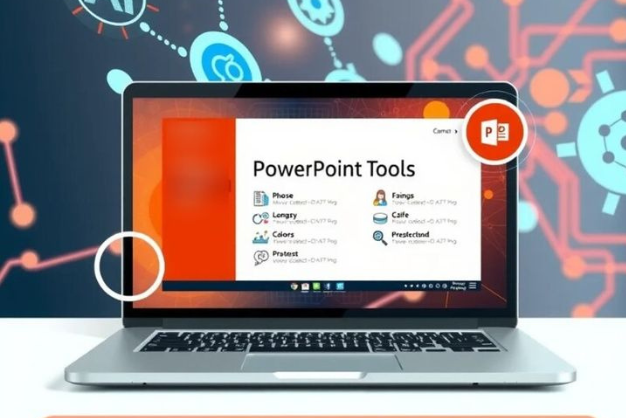
In the current high-speed digital era, where communication is made up of more images than text, and where ideas are easily spread by word of mouth, PowerPoint still forms a key center stage in the way people and organisations communicate. PowerPoint has still been a reliable and common tool in business, education, government, and professional communication even with the existence of newer web-based presentation platforms. Its popularity does not happen by chance, PowerPoint provides a unique set of flexibility, availability, and design that helps it to remain applicable in the current digital communications.
Universal Accessibility and Compatibility
The fact that the use of PowerPoint has become very popular is one of the greatest reasons why it has remained important. PowerPoint, which is a component of the Microsoft Office Suite, is present in almost all computers that are used in business, education, and government. This implies that files can be shared, opened and presented easily without compatibility problems.
PowerPoint is also offline ready so that presenters are not at the mercy of internet failures even in areas with limited internet access. This renders it especially useful in the classroom setting, conferences, and overseas workplaces where not only can we not always be assured of reliable technology.
Organized and Effective Communication
The use of slides in PowerPoint predisposes the presenter to a logical and clear content organization. Every slide is considered a visual gateway that represents a complex information into parts that are easy to digest. This design assists viewers in tracking of ideas, recalling important details and being entertained during the presentation.
Practitioners in all fields depend on PowerPoint to present:
- Sales pitches
- Financial reports
- Project proposals
- Research presentations
- Training sessions
This process-organized method facilitates making good decisions and it enables the orator to be able to say the maximum with minimum words.
Effective Visual Communication Skills
The digital era has necessitated the use of the visual part of communication and PowerPoint can perform well in this field. PowerPoint allows one to turn data and ideas into attractive visuals without a high level of design skills through its in-built features like templates, SmartArt, charting, animation, and image editing capabilities.
The possibilities of the design of PowerPoint enable presenters to:
- De-chart and de-infograph statistics.
- Mark important concepts with graphic images and icons.
- Direct attention by application of animations.
- Develop storytelling sequences that amuse.
PowerPoint is exceptional in terms of offering great visuals that are crucial in persuading opinions and keeping the audience engaged; especially in business aspects like marketing, education, and analytics.
Flexibility Multiple Communication Formats
One key advantage of PowerPoint is that it is flexible. It is not a mere slideshow application- it enables all types of communication, such as:
- In-person presentations
- PowerPoint is designed to be used in projectors and screens in the classrooms, meeting rooms, and event halls.
- Virtual and hybrid meetings
- PowerPoint is compatible with such platforms as Zoom, Microsoft Teams, and Google Meet, which is why it is the most appropriate when delivering a presentation remotely.
- On-recorded and distance learning.
- PowerPoint is also popular in its training module and online course creation with its built-in recording, narration and the ability to export to video capabilities.
- Interactive content
- PowerPoint can be considered as a tool of interactive learning and communication with the help of hyperlinks, clickable menus, and embedded videos.
It is also a flexible solution in a world where communication environments keep changing due to its capacity to work in various contexts.
Teamwork and Work Processes
The other factor that makes PowerPoint a critical tool is the fact that it highly favors teamwork. The current versions of PowerPoint give individuals the ability to collaborate on the same file in real time, comment, track changes, and work across devices.
This helps effective cooperation among: in workplaces.
- Project teams
- Research groups
- Marketing departments
- Academic partners
- Global organizations
It also integrates well with the other Microsoft applications like excel, word, outlook and SharePoint to ensure that the workflow is smooth.
Active Institutional Integration
In addition to features, PowerPoint is part of the organizational culture. The use of PowerPoint by many institutions has been decades-long, and it became the default method of communication and training. This has already led to the familiarity of employees, students and educators with its interface and has saved them time in learning and has enhanced their productivity. This cultural assimilation supports the position of PowerPoint as a conventional professional channel.
Conclusion
The historical significance of PowerPoint in the current online communication is explained by its availability, readability, visual superiority, flexibility, and thorough integration into the working reality. In business presentation, education, research presentation, or web-based training, PowerPoint assists in shaping ideas into powerful, structured and visual content. PowerPoint is a strong and trusted tool, as the process of communication is still developing, which means that its usefulness in the virtual world is only approaching an end.