





The ever-changing, busy, and information-driven world has made critical thinking to be one of the most demanded abilities to achieve personal and career success. Critical thinking allows individuals to evaluate situations in a more effective way as well as respond in a more efficient way, both in the evaluation of the information, problem-solving and strategic thinking and in the day-to-day life, individuals become more robust and involved in the processes. It is a profession-cutting, academic education-cutting, age-cutting ability in other words, a base of lifelong learning and development.
Training to be a critical thinker
The ability to think critically can be determined as the faculty to be objective in evaluating the information, analyze the evidences, identify biases, and make a decision based on the reason. It entails curiosity, open mind and desire to question assumptions. Thinking critically is dynamic and disciplined (unlike passive thinking) it is what makes a person explore more as he or she sees through the surface of what is being presented in his/her reasoning before making a decision.
In conscious terms, critical thinking can be defined as a set of various skills, which are interpretation, analysis, evaluation, inference, explanation, and self-regulation. All these skills combined enable individuals to have the ability to make good judgments, address those accurately, and avoid being misled by half-baked or misconstrued facts.
The Benefits of Critical thinking as to Why It Is Relevant to Personal Life
Critical thinking is not an activity that is conducted in the workplace, but it is also an important aspect in everyday life. It is used by people to make responsible decisions, deal with the relations with other people, interpret news and media messages and solve personal issues.
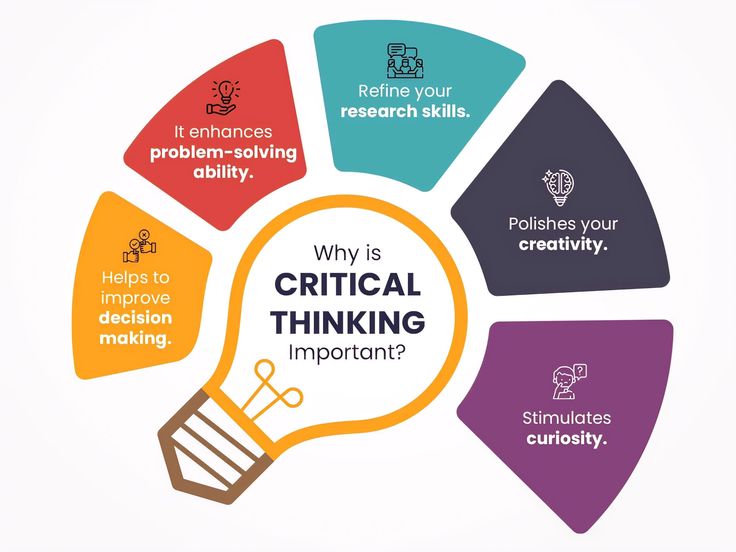
1. Better Decision-Making:
The application of critical thinking can be applicable in financial planning and health choices to ensure that individuals can balance out options, the voting of long term results and make smart choices. This decision-making process will increase the rationality and consistency of the risk and benefit analysis that will make people more confident.
2. Improved Interpersonal and Inter-group Communications and Relations:
Critical thinkers are more listening and empathetic listeners. They ask pertinent questions, insist on clarifications before acting and conduct respectful counterarguments. This enhances bonds with relatives and friends as well as colleagues at work as there are no misunderstandings and conflicts of interest.
3. Higher Emotional Intelligence:
One of the sources of self-awareness and reflection is critical thinking. It enables them to question themselves and their emotional responses, in response to stressful circumstances and respond healthily. This causes resilience and emotional regulation- useful qualities of self development.
4. Assurance of Misinformation:
The fake news propagates at a high rate in the world where online contents are now the new order of the day. Critical thinking might assist to confirm the sources and revise the arguments and not to be deceived by the untrustworthy information. It is a very important skill to negotiate the social media, news, and internet worlds, respectively.
The Professional Success and Critical Thinking
One of the most applied skills at the workplace that are regularly featured by employers all across the world is critical thinking. It is imperative to innovation, problem solving, leadership and quality team work.
1. Better Problem-Solving ability:
Every job problem solving is either technical, inter-personal or organizational. The ability to simplify a complex problem by reducing it to its root causes and providing a viable solution allows critical thinkers to be able to make the complex problem appear less complex. This is because they are able to examine different approaches, making them a worthy asset in any working environment that may be theirs.
2. Strategic Planning:
Strategic planning is improved and the decision-making is also improved.Critical thinking can be favorable to the leaders and the employees in the strategic decision making.The informed decisions made by the professionals via market pattern, customer behaviour and organizational risks leads to success in the long-run.
3. Innovation and Creativity:
Critical thinking inspires creativity that causes the questioner to be keen to think outside the box and test the new ideas. Through questioning the problems in new ways, people will discover new solutions and will ensure that their fields transform in the same direction.
4. Increased Co-Operation and Teamwork:
Strong critical thinkers in firms are more effective in terms of communication, constructive debates and logical decisions. This limits the friction and improves the performance of the team. Critical thinkers are also able to adapt to the change with ease thus they are the ideal match in a dynamic job environment.
5. Improved career opportunities:
Technical knowledge is becoming more of a lost value as more importance is given to critical thinking with the emergence of industries. Analytical and reasoning are some of the skills that assist professionals to move forward in terms of leadership, promotions, and succeed in competitive labor markets.
Learning of Critical Thinking
Though it is a fact that there are people with good analytical skills, as we are aware of, there are others who can acquire the skills of critical thinking through the training process. The strategies that support the development of critical thinking are a number:
- Asking but not always believing what one hears.
- Evaluation of evidence using source, data and views.
- Giving the personal biases into consideration so that their impact on the decisions can be minimized.
- Arguing and debating so as to explore different views.
- Practicing the logical problem solving.
- Read widely to build up a larger body of knowledge, understanding.
The radical impacts on learning and performance are the reasons why the critical-thinking training is being provided in schools, universities, and workplace.
Conclusion
Critical thinking is not merely a learning skill, but it is a life skill, which defines the personal happiness, success in career, and effective participation into the society. Those who have good critical thinking skills are better in making themselves better decisions, talking, solving problems creatively, and negotiating complex situations without any fear. Critical thinkers will have a greater need since the world will continuously evolve. Having this essential skill, individuals can do more, play a role in their respective communities, and be successful in life and career.