




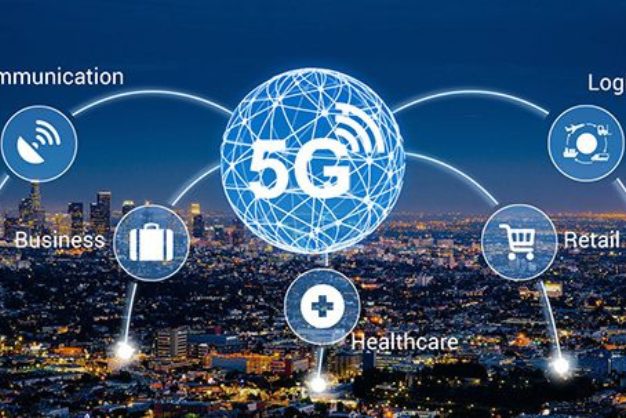
One of the most radical changes in the world communication is the introduction of the 5G technology. The fifth generation of mobile networks, 5G is far more than only being able to quicken the internet on a smartphone: it is able to support new domains of digital ecosystems, facilitate new technologies, and maintain pace with growing requirements of next-generation, real-time, and dependable communications. In the world, 5G is replacing the manner in which individuals interact, work and innovate in areas of business, healthcare, transportation and entertainment. It is one of the pillars of the modern digital transformation because it impacts on industries in a multisectoral way.
What Makes 5G Unique among the other Generations
The difference between 5G and 4G is huge not only in terms of speed but also capacity, latency and network efficiency. As compared to 4G which offered the ability to browse the internet, stream and communicate the speed of 5G is up to 100 times faster and has much more reduced latency and even allowed millions of devices to connect simultaneously.
Key improvements include:
- Minimum latency to near real time communication.
- Imense interconnection of gadgets in support of IoT ecosystems.
- Greater bandwidth of improved applications such as AR and VR.
These features constitute the globalised world where the digital systems operate in real-time and smooth basis.
The 5G and the Enhancement of the World Connections
One of the short-term benefits of 5G is increased global connectivity. The digital unavailability caused by an insufficient broadband network has been especially accurate in most areas of the globe and in the developing countries specifically where 5G will provide people with the ability to enjoy the high-speed wireless Internet without the need to lay out the substantial fiber network.
Enhanced connectivity is good:
- Reduce digital inequality
- Telecommute and study.
- Increase the availability of online services and e-commerce.
- Improve communication in times of emergency.
The 5G has led to social development, as well as economic participation through the aggrandation of access to broadband.
Expanding the Internet of Things (IoT) Revolution
IoT relies on billions of interconnected devices, which may be smart appliances, industrial devices, autonomous systems, and sensors, which was not the case with 4G but is possible with 5G. This is because the 5G has the capacity to support up to 1 million devices per square kilometer, which enables the operation of complex IoTs.
The plus of this revolution is that it empowers industries by permitting:
- Smart homes Interrelated homes.
- Digitalized machines and sensors in intelligent factories.
- Live information-driven smart agro.
- Smart grids in order to realize an effective energy distribution.
- IoT based on the 5G brings intelligence and automatisation close to reality and industries.
Transforming the Healthcare using Telemedicine and Remote care
Healthcare is one of the greatest beneficiaries of the 5G technology. High speed networks that have low latency are available which allow medics to provide high level care even if he is several thousand miles away.
5G enables:
- High-quality real-time video consultation.
- Wearables in managing patients out of homes.
- Greater velocity in relocation of valuable medical information.
- The correct functions of a robotic surgery.
These developments help in relieving the overcrowding of the hospitals, expanding the availability of the health care to the far flung areas, and boosting the response rate of the health care system.
Innovation and Business Marketing
Businesses operating within the sector of operation are applying the 5G to streamline business operations, improve communication, as well as create novel products and services. With respect to companies that are engaged in either manufacturing, logistics, or retail, 5G facilitates automation, supply chain tracking, real-time analytics and intelligent infrastructure.
Some key benefits include:
- Acceleration of the transfer of cloud services data.
- Better interaction with remote employees.
- More positive customer experiences using digital tools.
- Two machine learning and AI-systems are the following.
The 5G will enable the establishment of a more data-driven business environment, which will be efficient and lead to innovation and competitiveness.
Smart Powerful Cities and Smart Networks
The world transforms into the digitalized world, and the cities follow the same pattern and become efficient, safe, and sustainable with the help of 5G to help provide infrastructure communication in real time.
Applications include:
- High traffic management in an attempt to reduce traffic congestion.
- Environmental sensors of pollution.
- Light Street Saving Energy Lighting.
- Emergency notifications about the security of the population.
- These systems improve the living standards of the people and the urban projects.
Security Problems and Potential Delays
Nevertheless, 5G is associated with new challenges despite its potential. Expansion of networks is highly expensive and not all the regions are ready to manage it. In addition to this, the higher the number of devices connected, the higher the chances of cybersecurity breach.
Key concerns include:
- Lack of strength of protection of data.
- The potential of cyberattacks to the associated systems.
- Unequal access to 5G coverage
Such issues are the ones that must be addressed to ensure safe, inclusive, and reliable 5G implementation.
Conclusion
The 5G technology is not merely a fast network but it is a powerful platform of world-wide innovation. 5G is shaping the coming digital society, with enhancing connectivity, IoT, healthcare, business, and smarter cities. As the technology is being embraced across the globe, countries and industries that embrace the technology will be at the forefront to embrace the next phase of the technological advancement. The impact of the revolution that 5G leads is still in its nascent stages but, as the long-term consequences, it is destined to be disruptive.