





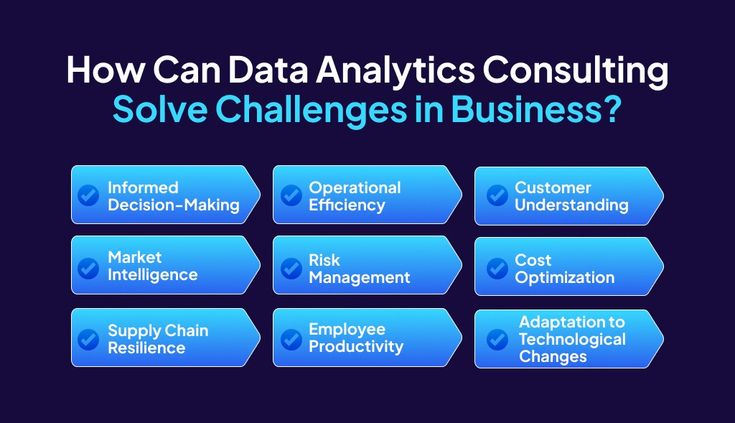
The strategic decision making process today has been made data-driven in the business world. Decision-makers in organizations are increasingly using more precise, timely and actionable data to make decisions using intuition and experience in a wider and wider manner. It is very crucial that the use of consultants ensures that businesses utilize data. The consultants can provide experience, knowledge and technology advice through which firms are capable of making sound decisions to enable them grow, operate efficiently, and be competitive.
The Rise of Data-Based Decisional Making
Data-driven decision-making refers to the process of using data analysis and interpretation to the strategies of the business and business operations. The organizations in the contemporary fast-paced market are clogged with loads of information in different forms including customer behavior, market, financial report, and operational statistics. The maneuvering in this complex land must have specialized knowledge in this field and this is where consultants will be of use. The consultants help organizations in setting up frameworks of how an organization will collect, analyze and interpret data. They ensure that the data is not only collected but transformed into information that can be put into action that could literally be used to shape the business performance. Without this guidance, organizations will just find themselves making decisions that are based on a partial or biased information.
Knowledge, Proficiency and Dispassionate Knowledge
One of the reasons why consultants are hired in business is their expertise. The consultants are normally aware of analytics, business intelligence, market research and industry specific trends that the internal departments may not know. They are also exposed to working in different projects and industries and can hence identify the trends, anticipate the issues and propose measures that the internal departments may not identify.
In addition, consultants are objective. Consultants are impartial when it comes to issues because they are not part of the issues as part of the internal employees. This objectivity will ensure that the evidence-based and best practice decisions will be based on objective decisions and not assumptions and internal politics.
Enhancing Productivity with the help of technology
Making decisions with data also presupposes the consumption of high-tech solutions, such as analytics systems and predictive models involving AI. Consultants help the companies to implement and make the most out of these technologies. They help organizations to decide on the right tools to use, integrate them with the already existing ones in the organization and train the teams on the most effective use of tools.
With the help of technology, consultants enable companies to automatize the process of data collection, create real-time data, and create visual dashboards to simplify complex data. It is its effectiveness that allows the decision-makers to be strategic, rather than specifying itself in data processing.
The Reduction of Risk and the Improvement of Accuracy
Unwell-analyzed decision-making is costly. Consultants assist in reduction of risks by providing high standards of data validation, scenario planning and predictive modeling. They also judge the consequences, weaknesses and recommend evidence based interventions that minimize the risk of uncertainty.
Further, the consultants improve the accuracy of the business decisions. They make sure that the data is clean, reliable and relevant and this makes the organizations make superior decisions with a higher likelihood of success. This is the fact-based strategy that increases the confidence of the stakeholders and investors.
Driving Strategic Growth
Besides the day to day operational decisions, consultants are involved in the formulation of long term strategic projects. They use data to assist them seek growth opportunities, resource management, and evaluate new market ventures or new product releases. The consultants are associated with analytics as a means of strategic planning that helps businesses to stay competitive and innovative in dynamic markets.
In one scenario, marketing consultants will be able to utilize the information regarding the behavior of the customers and the campaign performance to make advertising decisions. Financial consultants use the historical data of the financial record and prediction software to give an opportunity of investment or cost cutting. This type of data and experience combination allows companies to grow without trepidation.
Cultivation of Data-Driven Culture
The recruitment of consultants is not a single event in addressing the existing issues but also helps businesses to create a culture of data. Mentors Consultants will mentor internal teams, introduce the best practices, and promote critical thinking throughout the firm. In the long term, this will help the employees make evidence-based decisions, and an evidence-based management culture will be self-sustaining.
Conclusion
The consulting might be necessary in the age of easy access to information but a lack of clarity and the ability of a business to make data-driven decisions. They are priceless to the business strategy of the day as they are professional, neutral, technological guidance and contain a risk-reducing ability. With the assistance of consultants, it is possible to convert data into information that can be acted upon, grow and maintain competitive edge in the increasingly complex market.
The application of consultants is not merely a fashion but a strategic plan of the companies wishing to endure the digital age of information.