





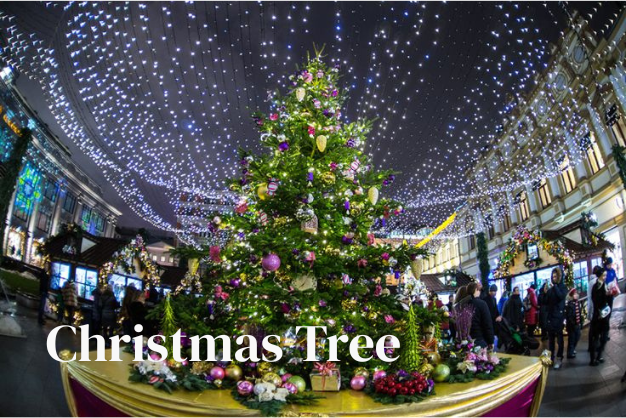
A well-known example of a universally accepted symbol of the holiday season is the Christmas tree, which can immediately seemingly bring to mind a feeling of warmth, tradition, and the holiday spirit. The Christmas tree has a strong cultural resonance that cuts across continents and generations regardless of where it is located, whether in a family living room, a busy city square or a small village shop. However, what happens to this one tradition to become what we have today around the world? Christmas tree is a narrative about history and migrations, adjustment to culture, and human aspiration to make the darkest months of the year bright and happy.
Initial History and Significant niles
The ancient civilizations prior to the establishment of the relationship between Christmas trees and the Christian holiday utilized evergreens as energy and rebirth symbols long before the introduction of Christmas trees. The cultures of Egypt, Romans and early Celtic also took evergreen plants as a symbol of eternal life. People would also adorn their houses with branches of evergreen to remind them that eventually, sunlight and spring would come in the winter solstice.
The fact that evergreens are associated with winter festivals was the foundation of what now is the Christmas tree. The practice, however, was not undertaken in recognizable form until long after–at least in those parts of Europe speaking the German language.
The German Traditions behind the Christmas Tree
The contemporary Christmas tree is most likely to have originated in Germany in the 16 th century. During Christmas celebrations families would have decorated trees in their households, which they would decorate with apples, nuts, candles and homemade ornaments. In the 17th and 18th centuries the practice had become widespread in the area being developed into a central part of holiday celebration.
One of the turning points in the tradition was made by the Protestant reformer Martin Luther who allegedly became inspired by the beauty of the starlight falling on evergreen trees on a snowy night. He took a tree home and hung it with candles and this amazing display would shape the century-long Christmas decorations.
A Christmas Tree Rides through Europe and More
The Christmas tree came into much popularity during the 19 th century, particularly during the period when it was exported to Britain. The Christmas tree became popular in the English-speaking world when the tradition was popularized by Queen Victoria and Prince Albert who was of German descent in the 1840s. A photograph of the royal family around a Christmas tree was printed in the “Illustrated London News and was important in cementing the tradition as an important British and later American holiday aspect.
Christmas tree became a major element of the American holiday culture as European immigrants introduced the tradition in North America. It was already a staple in homes, town squares, department stores and atizable celebrations by the early 20 th century.
Internationalization and Cultural Acclimatization
The Christmas tree is now celebrated way outside of the German traditions. Even where Christmas is not a traditional cultural celebration, such as in Japan, South Korea, and some parts of Southeast Asia, countries with Christian majorities have warmed it into an exemplary part of winter celebrations and commercial decor.
The tradition has been made personal and adapted to the aesthetic of different cultures, religious practices and materials. The Christmas tree has turned into a blank sheet on which people are able to display creativity and cultural expression, whether in the form of simple wooden ornaments in Nordic countries or elaborate lit displays in big cities such as New York, Dubai, and Singapore.
The emerged Commercial and Public Christmas Trees
Large communal Christmas trees have become familiar sights in the 20 th century. Another grand display standard that was established was the annual tree at Rockefeller Center in New York City, first put up in 1931. The world cities imitated it, offering their local traditions, including the mighty light displays and the installations to be made of recycled materials.
These community trees have transcended being mere decorations and they are a representation of the community, the tourism and the joy of the season attracting millions of visitors annually.
The Future and Modern Trends of the Christmas Tree
The Christmas tree tradition is also changing as the world keeps changing. The following trends are some of the most prominent in the modern world:
- Sustainable trees: Environmental conscious customers are opting to either use trees that are locally grown, or using high quality artificial trees that can be reused.
- Significant lighting and digital decoration:The use of LED lights, applications-driven ornaments, and synchronized screens add some technological touch to the holiday season.
- Minimalist and culture inspired design: Since Scandinavian simplicity to over-the-top theme trees, personalization has remained a source of the tradition.
- Other substitutes: The use of wood, metal, recycled plastic, and even holographic trees is becoming a household trend in the contemporary world.
One of the factors that have made the Christmas tree so popular is the fact that it is open to new styles, technologies and cultural influences.
An Icon Which Makes No Time or Place
Christmas tree is not only a decoration, but also intercultural connection, a warm thought in the winter, and an image of togetherness, belief, and joy. The fact that it has changed the old green rites to a global icon of vacation shows the ability of tradition to change without losing the essence of happiness.
The families are doing this as they sit round their trees every year and they are all involved in a world heritage that is still expanding, shining and inspiring.